
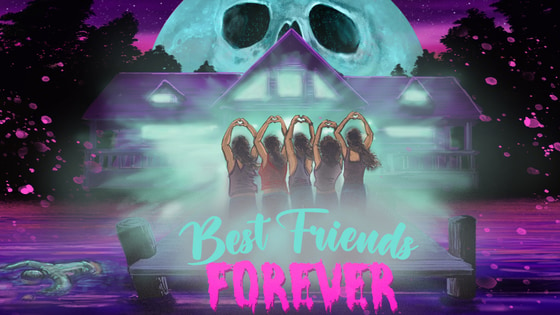
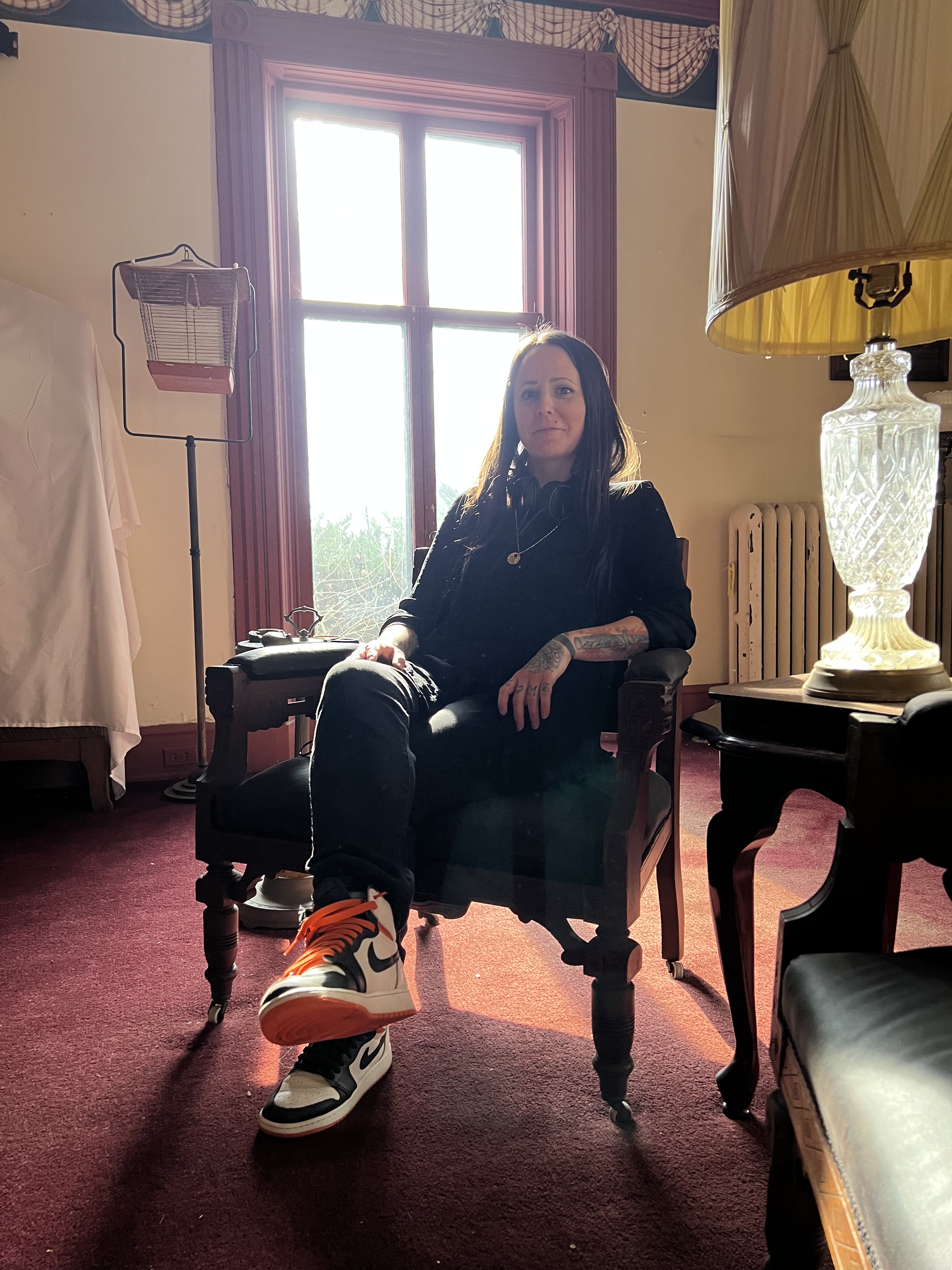
Liz Manashil wants to tell us a diverse female story that pushes taboos within the horror genre in her third feature film Best Friends Forever. I had a chance to sit down with the writer, director, producer’s rep, distribution consultant, podcaster, and mother of two to learn more about the film and her team. Best Friends Forever is centered around toxic positivity that turns supernatural in a gross-out horror comedy about the perils of female friendship.The film is currently running a Kickstarter campaign to raise funds for the production.
Liz Manashil and her writing partner Amy Taylor co-wrote the script over the last few years and have been sharing their screenwriting and film development journey on Liz Manashil’s Patreon. Taylor brings a wealth of literary experience to the project; she holds a B.A. in Classics from Princeton University as well as an M.A. in Classics from the University of Virginia. Taylor also earned an M.F.A. in Screenwriting from Hollins University.

de Meneses: What was the benefit in working with a writing partner for Best Friends Forever?
Manashil: It’s awesome. I process a lot out loud and I had gotten very frustrated in the past in writing my own work because I wasn’t able to express where the roadblocks were and I had to internalize them all. With Amy, she’s a very good writer, she has a great sense of structure and she has an eye for style. The most beneficial thing to me was meeting with her and talking out loud about how I felt and where I thought the bottlenecks were in the process of writing. We would do our written assignments separately so the most beneficial part of having a writing partner was empowering each of us to keep on going and to have a second set of eyes to double check if something was good or bad, they could verify how they felt about it. Amy was invaluable to the script.
de Meneses: You describe your film as a queer horror comedy about the gross things our bodies do. What kind of gross body horror can the audiences expect?
Manashil: Poop, pee, vomit. I don’t find vaginas gross at all but there will be some vagina stuff. I just like the idea of dipping into the taboo. In my last film we had a character going to the bathroom on camera and I was thrilled. I never see people just go to the bathroom in a movie, and we asked Ann Dowd to pee on camera. What we are promising are the things I mentioned and in general leaning towards the taboo and the goal is to make people a little uncomfortable with this movie.
de Meneses: Well I think most Kubrick films have a bathroom scene so you should be in good company. Let’s talk about vaginas for a second since you brought it up. A friend of mine has been seeing the new Alien: Romulus billboards around downtown Los Angeles and he can’t stop seeing a giant vagina in place of the alien head. Now when he sees the trailer all he sees is a leaky vagina just terrorizing people on a spaceship. It’s frightening. I’m very excited for the new film.
de Meneses: When it comes to queer representation in your film, what kind of representation are you hoping to showcase or highlight when it comes to telling more diverse stories?
Manashil : I’m pushing myself to make sure that I’m telling more stories that aren’t just replicants of me and who I am. After I made my first feature film Bread and Butter (2014) I realized I had made that with an all white cast and didn’t even think about that when I was making it. With my second feature film Speed of Life (2019) I really pushed to make sure I included racial diversity, and I always try to include body diversity. Representations of different types of beauty are important to me. With BFF I realized I hadn’t had any representation on non heterosexuality in my films and I was disappointed in myself. When Amy and I wrote the script we wanted to include different points of views and we wanted to bring in different types of representation in the film. We want our films to mimic and mirror the world around us. It was important to us that our two leads be queer. People have read the script and have thought that it was queer coded in terms of a queer romance but for me the film is about platonic relationships and the two characters happen to be queer.
de Meneses: The film focuses on childhood friendships, was there a significant friendship that played a big role in your life that inspired the film?
Manashil: Part of writing the script was a little bit of wish fulfillment. I would have loved to have been a part of a long standing friend group from childhood. I was inspired by a group of friends I had in grad school. It was one of the very few times where I felt I found my friend’s family. I went to USC, and I started to blossom in grad school. I was a really anxious person and very unhappy before that point. The very first draft of characters in the script were built off of these friends in grad school and then when Amy came on board she fleshed them out into more professional figures but in my mind when I’m casting I think back to the people that inspired those characters.
de Meneses: Can you give people an overview of the story in BFF?
Manashil: It’s essentially a cabin in the woods story with the cabin being an upscale vacation rental lake house. The group of friends were close in high school and then they drifted apart as they got older. Ten years later they get everyone back together for a bachelorette party and the house that they’re staying in manipulates their resentment and tension into a supernatural influence that leads to them attacking each other physically and emotionally.
de Meneses: What excites you about horror as a genre when it comes to telling female centered stories?
Manashil: I just get excited in life and film when people are just a little uncomfortable. Horror offers so many opportunities for discomfort. That’s exciting to me. My first two films had a lot of masturbation in them and my second film had oral sex between Ann Dowd and Ray Santiago. I try to put in slightly subversive things. What excites me about horror is boundary pushing. We don’t have to play by the rules. Movies like Titane (2021) I love the unexpected journey. I love the movie Tusk (2014). I was very surprised by how far that movie went. When it comes to relationships with women in horror and women directors I love seeing women directors attacking a great kill and a great blood spurt. I want to make people cry at my movie.
de Meneses: What was the last film that made you cry? That made you emotionally connect so much?
Manashil: I’m less than a year postpartum so everything makes me cry, Anything with a dog or a child. I’ve been watching a lot of 8os action movies so I’ve been staying in a safe little bubble. Stakeout (1987), Beverly Hills Cop (1984), Bird on a Wire (1990). The last thing that made me cry was The Bear (TV series). I leave every episode in awe of the storytelling.
de Meneses: Who are some of your horror influences and how have they shaped and informed your current film.
Manashil: I come from the school of Joe Bob Briggs. My husband is obsessed and brought me in. We’ve been watching The Last Drive-In with Joe Bob Briggs for a long time. We watch every single week. One film that comes to mind is A Girl Walks Home Alone at Night (2014). That film floored me. The obiance that she created in that film, the dread, the mystery. I loved it. Joe Bob Briggs informed my love of 80s camp horror. The big movie that was mind melting for me was Possession (1981). I still can’t get over that one. I go with high art and low art. I don’t watch a ton of slasher films but I am really drawn to exploitation, B movies, camp, cult.
de Meneses: BFF is a mix of genres, you’re combining body horror, comedy, melodrama. Is there a body horror film that comes to mind that did something clever in their storytelling that you appreciated?
Manashil: Tetsuo: The Iron Man (1989) It was fascinating.
de Meneses: As a filmmaker that is very open and transparent about your process on your podcast and social media. How is BFF different from your previous two films in terms of visual athletics and techniques that you are hoping to create?
Manashil: I’m thinking about it. I didn’t have the time to think about it before. With my first feature I thought, I got to make a feature. I got to get it in the can. I have a script, I know what I want to do. I was very reactive to the creative process. When it came to my second film I worked with my DP in advance but I still had a very hard time defining the aesthetic that I wanted. She helped inform the look of that film. With BFF I’m going on SHOTDECK developing different decks and talking with DPs. I’m trying to develop a meaningful way to talk about how this film will look. I’m trying my hardest for this film to not give up on specialty shots and to do more moving shots. One of things I’m trying to do with the horror in this film is to be visually dynamic and not run of the mill.
de Meneses: You are currently crowdfunding for BFF on Kickstarter What are some of the perks that you can highlight that people should take advantage of?
Manashil: My husband is an actor and he does a mean Christopher Walken impression. We are enlisting him to do thank you videos as Christopher Walken. The reward that I really like is when the movie backer gets to be a part of the movie process. In Bread and Butter (2014) one of the rewards was you could write a sentence into the film. This guy decided to propose to his girlfriend as his sentence in German. If you watch Bread and Butter (2014) in the very last frame in the movie is proposing to his girlfriend. You can put a word or a quote on our slate, on our call sheet. To be a part of the process is very exciting for me. We are auctioning off the name of our horror house. The audience / backer is the one that I find most exciting.
de Meneses: With all your years of distribution experience, how do you hope to disrupt the current model and get your film to your intended audience?
Manashil: The reason people don’t deviate from the current model is because it’s very hard to connect with audiences if you don’t have a platform that they are familiar with. What I’m excited by is the idea of live events. Screenings where we bring in something silly, something different, something weird for us to all do in a room together before or after the film. To me that’s disruption. If we can do something that makes the community screening experience delightful. I think that’s disruptive. I’m trying to figure out something delightful for audiences.
de Meneses: What are your top three horror films?
Manashil: The opening scene of Scream (1996) changed me for life. It’s the scariest thing I’ve ever seen. I saw it at a slumber party when I was thirteen. It was traumatic so I have to say it’s in the top three. Drag Me to Hell (2009) is one of the major inspirations for this film. It straddles that world of making you want to laugh and making you want to throw up and being scared, all at the same time. Last one, Society (1989). It’s super weird, super gross. Can we get anywhere near that cool and that close? I hope so.
You can follow Manashil’s film at the link below




Leave a Reply