
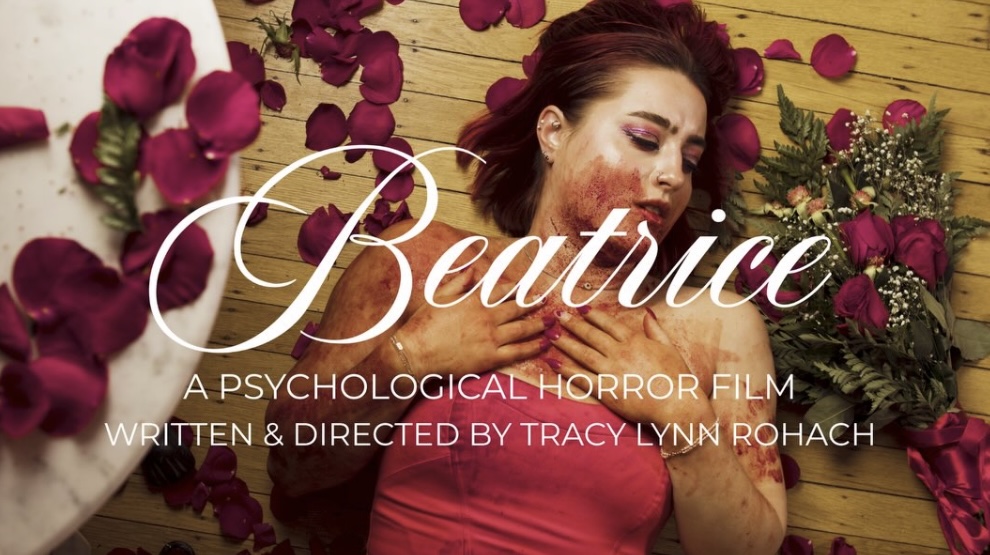
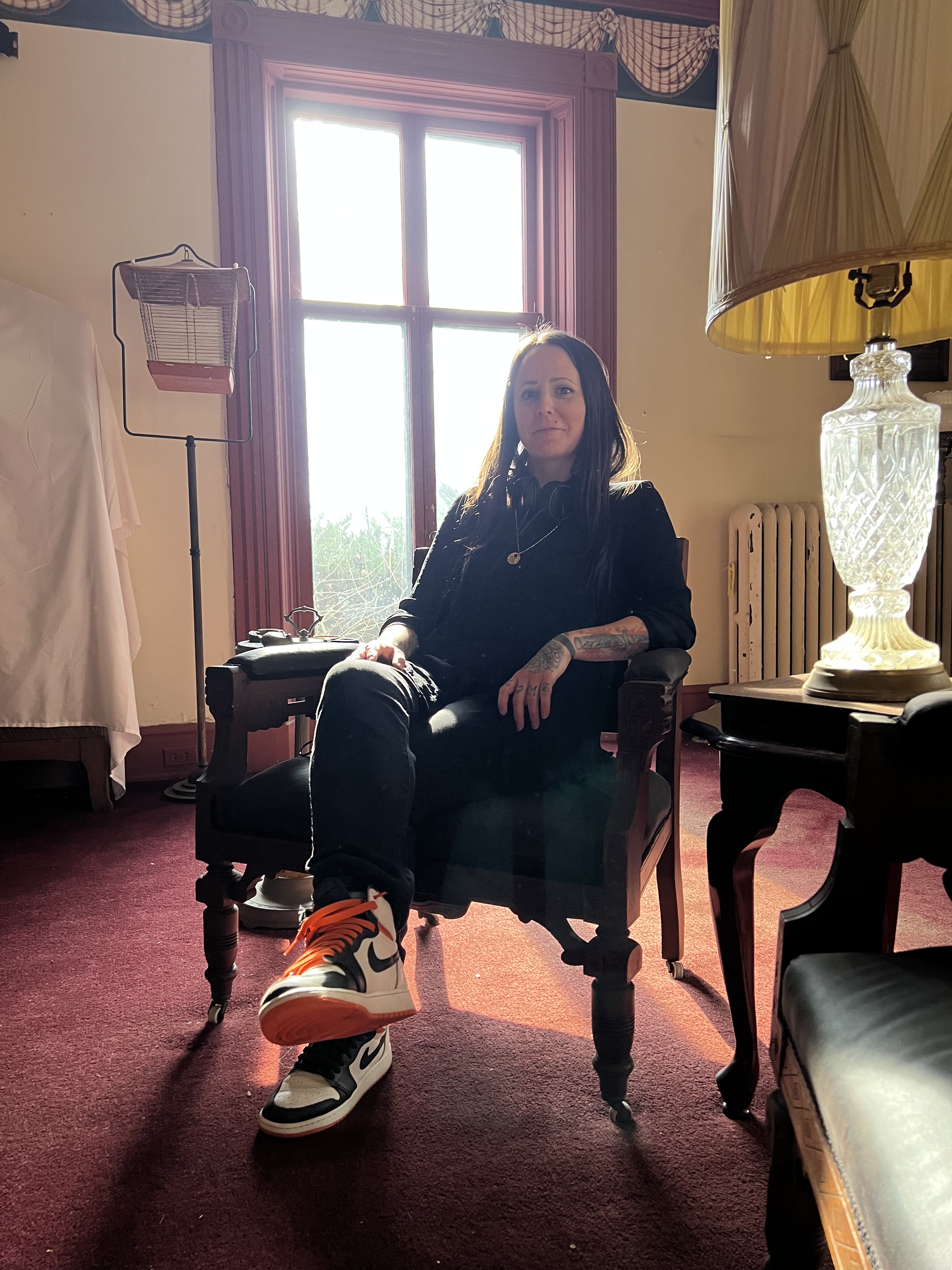
Tracy Lynn Rohach is a Philadelphia-based writer and director whose work examines gender inequalities, female empowerment, and the absurdity of navigating a chaotic world. Her image making is almost never neutral, utilising visceral components to achieve a sense of what she values most in her professional and personal life – autonomy and power.
Tracy’s work has screened both nationally and internationally and has garnered awards across narrative festivals and screenwriting, including “Beat Horror Film” at The Women’s Film Festival, and “Best Student Horror Short” at the Poconos Horror Fest for her 2025 horror short Manicured.
Tracy is beyond excited to embark on this monumental milestone in her career of making her debut feature film, Beatrice. Here is what she had to share about it exclusively with Horror Valentines.

Ella Valentine: Hi Tracy! Lovely to have you here! Tell us a little about yourself and your filmmaking journey so far!
Tracy Rohach: Thank you so much for having me! My name is Tracy. I’ve been in love with film and filmmaking from a very young age. Before the gear came into my life, I made films in my head as a child. I watched a horror film at way too young an age with my sister Bethann, and later that night, I started dreaming about some of the images in the film. I woke up, sprinted to the bathroom, and started vomiting from fear. I think my love for film was really crystalized then. I realized the power in image making in the mind and the body, and I wanted to make that power for myself.
Ella Valentine: How did the idea of Beatrice come to life for you and why did you choose this particular story for your directorial debut?
Tracy Rohach: It’s kind of funny, Beatrice was really born from wanting to make a Valentine’s Day film. I love the aesthetic of Valentine’s Day, the colors and textures, cherubs, hearts, reds and pinks and whites, the seduction and bodily senses. Beatrice was always about desire, even from her first draft. After making the short film and screening it for a few small audiences, the room would fill with questions around what happened in the summer Beatrice witnessed Shane’s violence and the subsequent year that followed. There was discourse around Beatrice’s choices, her sense of justice, and I realized I wasn’t done with her story. I wanted to shape and project her voice so she could answer those questions herself.
Ella Valentine: You have already shot the short film concept – how was this experience for you?
Tracy Rohach: The experience of making the short film was intense. My work usually contains themes around gendered violence and psychological disturbance, and I’m deeply grateful for the team around me who supports and honors the stories I tell.
Ella Valentine: During the making of the short, did you encounter anything in particular that you thought wouldn’t work in the feature, or the opposite – did it help you come up with new ideas for the feature?
Tracy Rohach: It’s interesting, when I started writing the feature, I realized I really wanted to position the relationship between Beatrice and Julia as the central one rather than the relationship between Beatrice and Shane. The feature goes through everything that happened in the months leading up to the climax of the film, which initially I thought would be filled with moments between Beatrice and Shane. As I was writing, I knew I needed to interweave moments of Beatrice experiencing love and care from her best friend, Julia, to emphasize the tragedy of two women being torn apart by one’s experience with a toxic man.

Ella Valentine: What should the audience expect from Beatrice?
Tracy Rohach: Audiences should expect lots of difficult questions around desire, friendship, sexuality, and justice. They will be challenged by what they see, and I hope it inspires disagreement and conversation around its themes. I want difficult conversations to happen—it will be impossible to discuss this film without exposing something deeply vulnerable within oneself.
Ella Valentine: Which filmmakers are you inspired by?
I am very inspired by Marina de Van, Claire Denis, Catherine Breillat, Julia Ducournau—filmmakers who intensely push boundaries and aren’t afraid to portray subversive images that cross over into existentialism and force conversations around female desire and autonomy.
Ella Valentine: Great selection! What type of stories excite you the most?
Tracy Rohach: I am deeply excited by work that is difficult to watch, and that begs the question, why should this work exist? Why is it important that it does? I love stories that challenge my own sense of morality and why I believe the things I do. I love stories that have no concrete sense of morality, that illustrate human beings as dynamic, confusing, and imperfect.
Ella Valentine: I love that. We also appreciate that your entire crew is female! What drove this decision for you?

Tracy Rohach: Currently, we have one member of our crew who identifies as male. This decision was rooted in the desire for the makers of this film to understand its themes on a very deep level, and to elevate the voices of female makers in film.
Ella Valentine: You have just launched the fundraising campaign for the feature film. Congratulations on that! What does the campaign involve?
Tracy Rohach: Thank you so much! Our campaign is on Seed&Spark, a platform that is incredibly supportive to indie filmmakers. The campaign involves visual aids, with story and thematic details.
Ella Valentine: We can’t wait to watch the movie! Where can our readers donate?
Tracy Rohach: Thank you! We can’t wait to make it! Readers can contribute to the film’s production at the following link, and believe me, we are deeply grateful for any support we can get: https://seedandspark.com/fund/beatrice-2#story. Even if you can’t contribute financially, a like and follow is another incredible way to help us out! Here’s our Instagram: https://www.instagram.com/beatricefeaturefilm/.




Leave a Reply